Let's talk about tigers.
I am back in Madhya Pradesh
I am back in Madhya Pradesh. Madhya literally means middle. I have always been in love with this part of India. This part of the country has something to offer—maybe it’s my nostalgia for the past that I am seeking. The last time I was here, I had been living close to a river with a dog, and all those silent past moments revisited me.
This time, I find myself at Shramdan, a handloom initiative run by Jain monks. I don’t know much about Jainism, at least not in any real, lived sense, and that curiosity brings me closer to the people here. That’s how I meet Amit.
Amit is not what I expected. He once worked at Deloitte in New York—living a life that feels worlds away from this one. And yet, here he is now, a celibate monk, quietly running this entire operation. He’s from near Sagar, and there’s something incredibly funny about him. He won’t let you speak—unlike the ideals of a monk, he is always on the phone, running here and there, getting things done.
He tells me how it all began. He gets interrupted by a phone call. All I could gather was that their guru gave them a simple direction: create something ethical, something that connects directly with people. That idea slowly turned into this handloom initiative. They traveled across India, learning techniques, understanding the craft, even building their own looms. Eventually, they returned to Binabara, about 75 kilometers from Sagar, and started small—just five looms, with five or six people.
And now, it’s something else entirely.
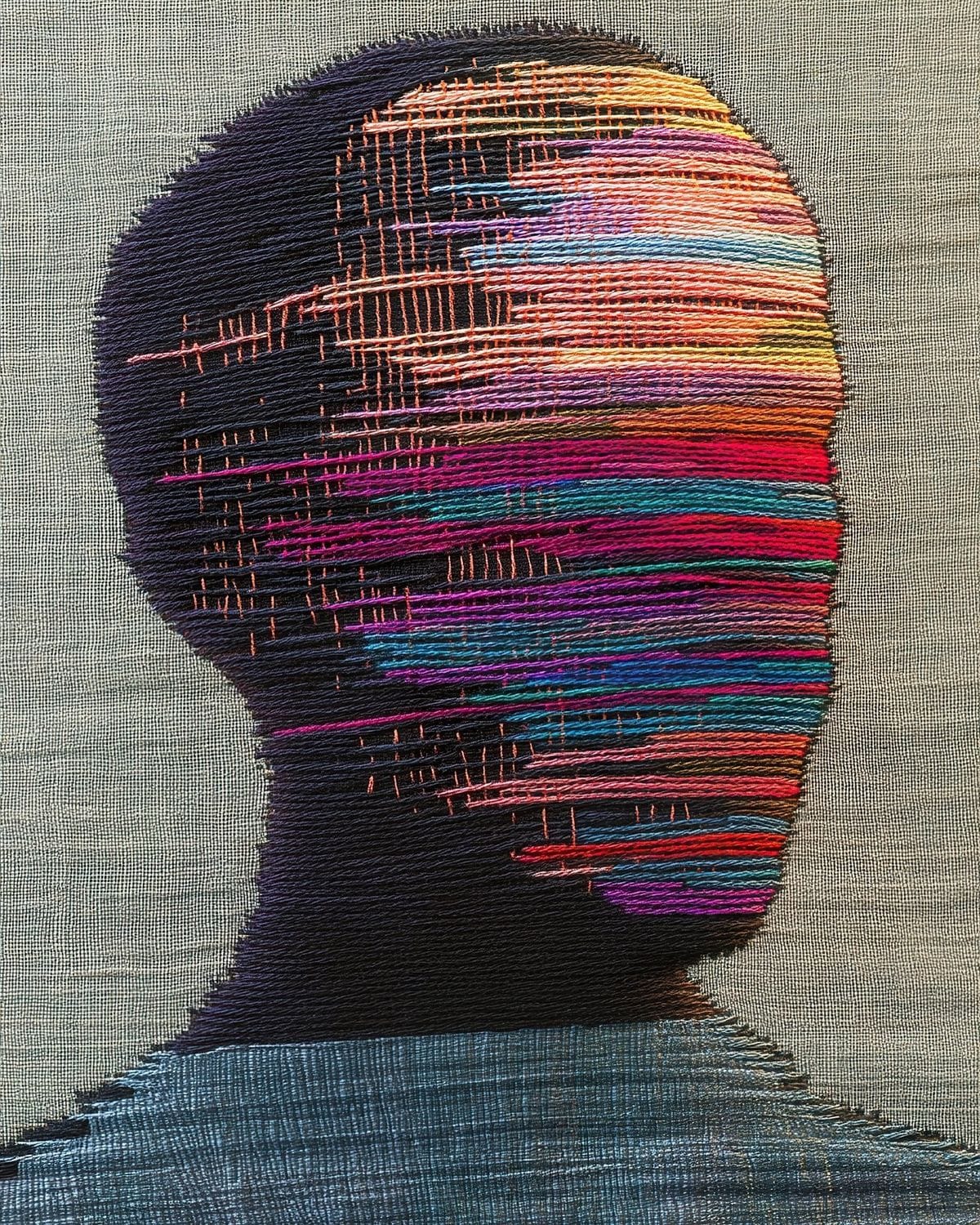
Around 2,000 people are part of this ecosystem. They provide yarn, support artisans, and create fabric that feels both traditional and experimental. There are stitching centers, embroidery units, and a growing involvement of women in the workforce. What started as an idea has become an endless clunking of shuttles and peddles and tension of the thread turning into a network of fabric.
I walk through it all, trying to take it in, and I feel this quiet sense of belonging. There’s something deeply honest about what they’re doing—preserving a dying art, but doing it with intention, with ethics.
And I want to be a part of it, even if just for a moment.
The first connection that I made was with a barber, who took me into the shade and got rid of my long hair. As I complained that I didn’t want to lose my hair, he exclaimed that it was good that I was donating my hair and leaving it behind. A sense of understanding came over me. I didn’t protest.
I start thinking about collaboration—about creating something of my own here. I want to learn the process properly, especially the complexity of setting up warp and weft on a loom. It’s something I’ve struggled with, something I’ve never fully mastered. One week isn’t enough—I already know that—but it’s a start.
This is just day one.
I’m surrounded by nature, by a kind of raw stillness that feels almost wild. And somewhere between the looms, the people, and the quiet rhythm of this place, I feel like I’ve stepped into something that’s going to stay with me for a long time.